
Get a Quote (289) 927-5011

Historic Restoration

Careful, meticulous work on older homes and buildings across Oshawa, Whitby, Bowmanville and Toronto. We preserve the brick, stone and detail that give a house its character, and bring what sits underneath up to modern standards.

Keep the character, fix what is underneath

Historic restoration is masonry work on buildings that were put up a long time ago, with materials and methods that are not used much anymore. Brick arches over windows, soft old brick laid in lime mortar, cut stone sills and lintels, chimneys, and the piers and pillars that frame a front walk.

It is for owners of older homes who want them to last without losing what makes them worth keeping. The usual problems are water getting into a wall, hard modern mortar damaging soft old brick, an arch that has started to drop, or an earlier repair done with materials that do not belong there.

The work is slow on purpose. We take down only what has to come down, keep and reuse the original brick wherever we can, and rebuild it the way it was built the first time. Then we deal with the modern side, the foundations, waterproofing and structure, so the old work above it has something sound to stand on.

What we restoreBrick arches, walls and piers, gate pillars, chimneys, cut stone sills and lintels, repointing in matched mortar
HowReclaimed brick to match, original pieces reused, mortar matched to the brick, by hand
Who does the workOur own crew, start to finish
WhereOshawa, Whitby, Bowmanville, Courtice, Toronto and across Durham Region

How a restoration job runs

The first half of the job is finding out what you have. The second half is putting it back the way it was meant to be.

01

Survey

We look at the wall closely, open up a small area if we need to, and find the cause. Water, the wrong mortar and settling below grade are the usual suspects. The cause decides the repair.

02

Plan and source

We work out what has to come down and what can stay, source reclaimed brick or stone to match, and settle the mortar. If the home is designated, this is when the heritage permit gets sorted.

03

Take down and rebuild

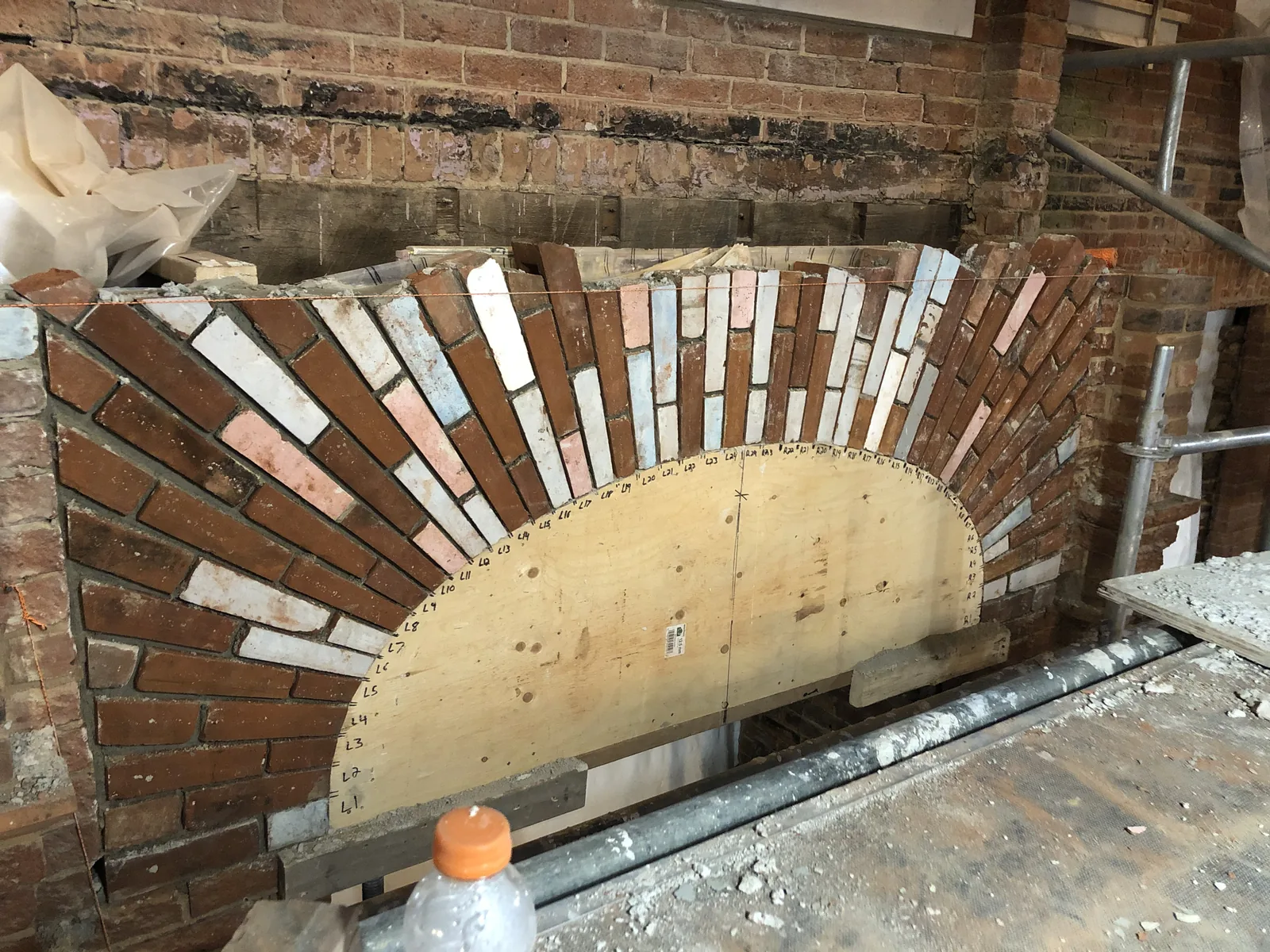
Pieces come down carefully and are kept. Arches get rebuilt on a form with every brick laid out first. Original material goes back in wherever it is sound.

04

Point and hand over

Joints are pointed to match the original profile and the face is cleaned gently, never sandblasted. We walk the work with you and back it with a written warranty.

The choices on an old wall

Most restoration decisions come down to four questions. Here is how we weigh them.

Repoint or rebuild

Repointing replaces worn mortar in a sound wall. Rebuilding takes down and relays brick that has cracked, bowed or come loose.

Repoint when
The brick is sound and only the joints have eroded
Trade-off
Repointing a wall that needs rebuilding only buys a few years

Reclaimed or new brick

Reclaimed brick is salvaged old brick. New brick is chosen to sit as close to the original as possible.

Reclaimed for
Visible repairs on old walls, arches and pillars where it has to disappear
Trade-off
Takes longer to source and is limited to what is out there

Lime or cement mortar

Lime mortar is softer and breathes. Cement mortar is harder and sets faster.

Lime for
Soft old brick and stone, so the joint wears instead of the brick
Trade-off
Cures slowly and needs mild weather, so the schedule bends around it

Repair or replace stone

Damaged sills, lintels and caps can sometimes be repaired, or replaced with new cut stone shaped to match.

Replace when
The stone is cracked through or has lost its shape
Trade-off
New stone takes time to cut and looks crisp until it weathers in

What drives the price

Restoration is priced after a site visit and written down before we start. On older buildings the honest answer to "how much" depends on what we find once a section is opened up, so we tell you up front what could change the number and why. Small jobs get a free visit. Larger ones carry a small consultation fee that comes off the final bill.

  • How far it has goneWorn joints cost far less to fix than brick that has to come down
  • Matching materialSourcing reclaimed brick or cutting new stone to match the original
  • Hand workArches, cut stone and detailed pointing take skilled time
  • Height and accessScaffolding, chimneys and tight side yards
  • What is behind itWater, foundations or structure that need fixing first
  • Approvals and seasonHeritage permits on designated homes, and lime mortar needing mild weather

Recent restoration work

Arches, pillars, piers and stone from older homes in Toronto and Whitby.

Tap any photo to view it full size.

Restoration near you

Every town has its own heritage rules. Here is what applies closest to the shop.

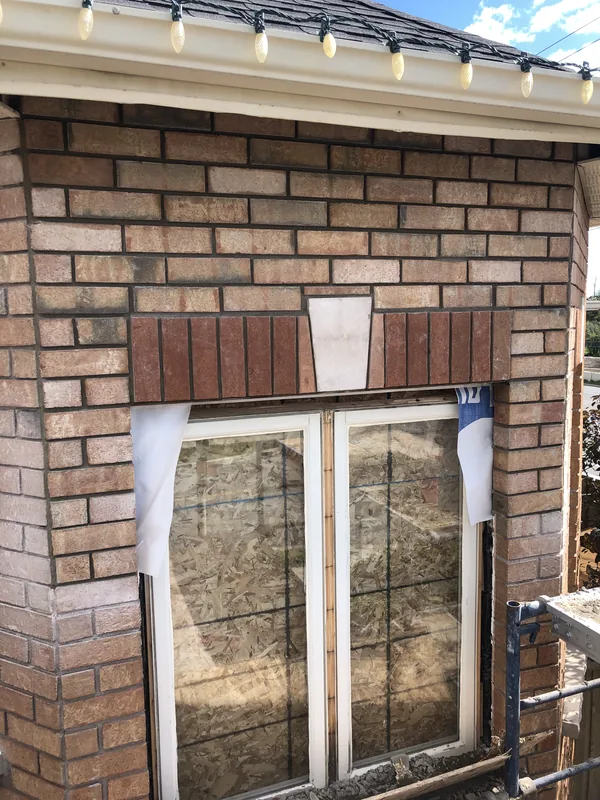
Brick opening with a soldier course header and stone keystone on a Whitby home
Whitby

Historic Restoration in Whitby

Whitby has two heritage conservation districts, the Werden's Plan neighbourhood in downtown Whitby and downtown Brooklin, and changes to designated properties in either one need a heritage permit from the Town. On a Whitby home we cut a new opening into an existing brick wall and finished it the way the house was built, with a brick header and a stone keystone, so it reads as if it had always been there.
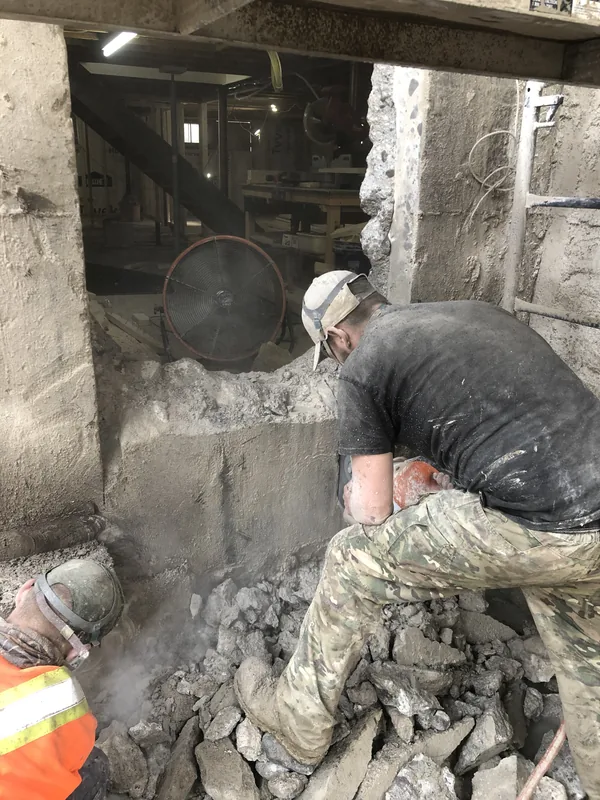

Crew breaking out an old basement wall by hand on an Oshawa job
Oshawa

Historic Restoration in Oshawa

Oshawa has more than 30 properties designated under the Ontario Heritage Act. Changing their heritage features needs a heritage permit, while regular maintenance and minor repairs do not need Council approval. With older homes the trouble often starts below grade, and on one Oshawa job our crew broke out an old basement wall by hand. We are based in Oshawa, so older homes here are a short drive from the shop.

Bowmanville

Historic Restoration in Bowmanville

Downtown Bowmanville still has many of its 19th-century commercial buildings. Some, like the Italianate commercial block at 19 1/2 to 23 King Street West, from around 1868, and the Bleakley Block at 19 King Street East, from around 1880, are designated by the Municipality of Clarington. Designated properties need the Municipality's approval before their heritage features change, and older homes around the downtown call for the same soft-mortar, matched-brick approach.

Also serving:Toronto, Pickering, Ajax, Courtice, Scarborough, Newcastle and Newtonville.

Restoration questions

Should old brick be repointed with lime mortar?

Usually, yes. Brick laid before modern cement mortar became common was set in softer, lime-based mortar, and the old brick is often softer too. Repointing it with a hard cement mortar makes the joints stronger than the brick, so moisture and frost work on the brick faces instead of the joints and they start to flake off. We match the mortar to the brick and the wall, which on most older homes means a lime-rich mix.

Is it better to repoint or rebuild?

Repoint when the brick is sound and only the joints have worn back. Rebuild when the brick itself is cracked, bowed or loose, or when something behind it has failed. We open up a small area first and look, because the face of a wall does not always tell you what is going on inside it.

Can you match the brick on an old house?

Often, by using reclaimed brick of the same age, size and colour. Older brick was not always made to today's sizes, so new brick can look wrong even when the colour is close. We source reclaimed brick to match, lay samples against the wall, and keep the bricks we take down so as many of the originals as possible go back in.

Do I need a heritage permit?

Only if your home is designated under the Ontario Heritage Act, either on its own or as part of a heritage conservation district. In that case, changes to the heritage features usually need a permit from the municipality first. Routine maintenance and repairs that do not change those features often do not. If you are not sure, the municipal heritage register will tell you, and we can help you work out what the job needs.

Can an old house be modernized without losing its character?

Yes, and that is most of what we do. The character is in the brick, the stone, the arches and the proportions people see from the street. The modern parts, like foundations, waterproofing, structure and openings, can usually be brought up to date underneath and around them without changing how the house looks.

Restoring an older home?

Tell us about the house and what is going on. We will come out, find the cause, and give you a straight answer and a written price.